Enregistrez-la dans votre nouvelle liste de favoris
Maximum 50 caractères
Économiser
Allons-y pour le halal
Over more than 12 years of organizing tours and assisting Muslim travelers who wish to visit Spain, we have never directly asked our clients this question: What does Al-Andalus mean to you? But we have found the answer many times in their faces and in the emotions most of them experience: pride, excitement, nostalgia for a brilliant period that seems so distant in time, a desire to discover and experience for themselves what may remain of Al-Andalus today, and the joy of finally being able to make a dream trip come true…
It hardly matters whether they are young people or retirees, couples, families or solo travelers, Arabs from the Gulf countries, the Middle East or the Maghreb, Muslims from Southeast Asia (mostly Malaysians and Indonesians), or travelers from Turkey, Europe or the United States… Above all, there is a profound emotion shared by all of them, regardless of their backgrounds. They all marvel at the legacy of Al-Andalus.
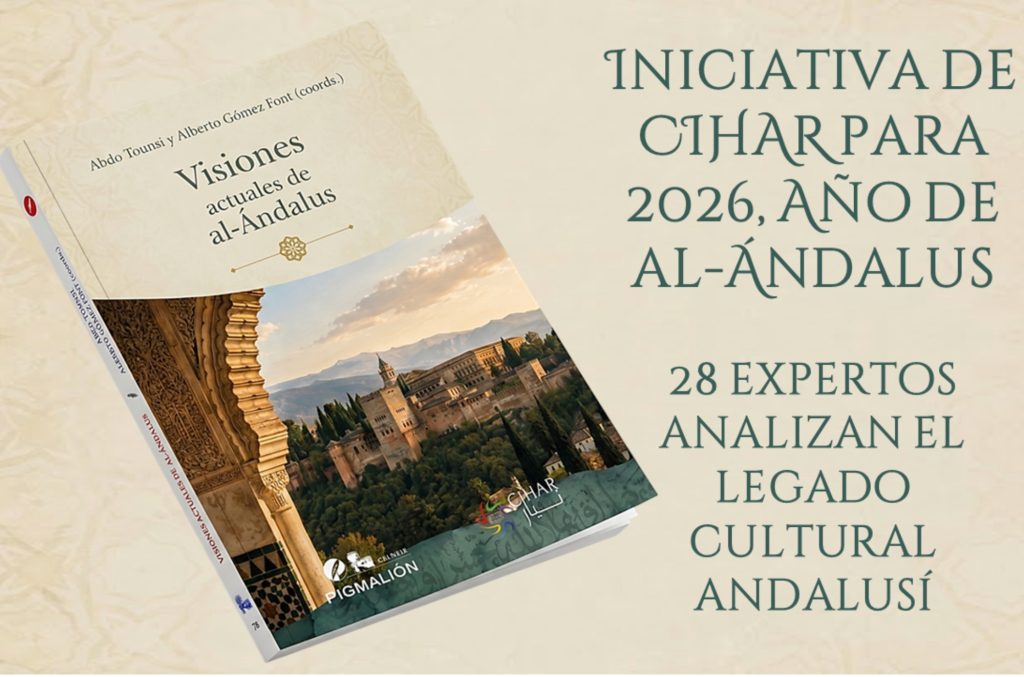
Recently, this very same question was put to us by the Círculo Intercultural Hispano Árabe (CIHAR), a Spain-based organization dedicated to promoting cultural exchange, intercultural understanding and relations between Spain and the Arab world, and Editorial Pigmalión for the book Visiones actuales de al-Andalus (Contemporary Visions of Al-Andalus).
Cover of the book Visiones actuales de Al-Andalus, published by CIHAR and Editorial Pigmalión. / CIHAR
I was among those invited to answer the question, “What does Al-Andalus mean to you?”, in this collective work bringing together 28 specialists and authors who reflect on what Al-Andalus was, what it represents today, and to what extent its legacy remains part of Spanish identity.
The book, presented in late June at the Ateneo de Madrid, one of the city’s most important cultural institutions, and now making its way to other cities across Spain, approaches Al-Andalus not only as a historical reality, but also as a cultural heritage, a reference point for identity, and a subject of contemporary debate.
In my contribution to Visiones actuales de al-Andalus, entitled “Un país único gracias a Al-Ándalus” (A Unique Country Thanks to Al-Andalus), I reflect on how discovering the Islamic origins of my hometown, Madrid, changed my understanding of Spain’s history. Despite having spent many years working as a journalist, and considering myself reasonably well-informed, I had been completely unaware of this remarkable aspect of the city’s past. The discovery came as a genuine surprise and sparked my growing interest in the history and legacy of Al-Andalus.
For me, Al-Andalus is not simply a chapter of Spain’s distant past, but an essential part of its identity — our identity — and one of the reasons why Spain is such a unique country in Europe. Its extraordinary cultural, scientific and artistic contributions deserve to be recognized and celebrated as part of Spain’s own heritage. This was the central message of my contribution to the book, which I also had the honor of sharing at its presentation at the Ateneo de Madrid.
This conviction also helped shape my professional path and, eventually, the development of specialized tourism initiatives such as Nur & Duha Travels and Let’s Go Halal, aimed at helping Muslim travelers discover and experience Spain and its remarkable Islamic heritage.
But how can Muslim travelers discover and experience the legacy of Al-Andalus in Spain today?
Here are some essential things to keep in mind.
Al-Andalus is much more than Andalusia
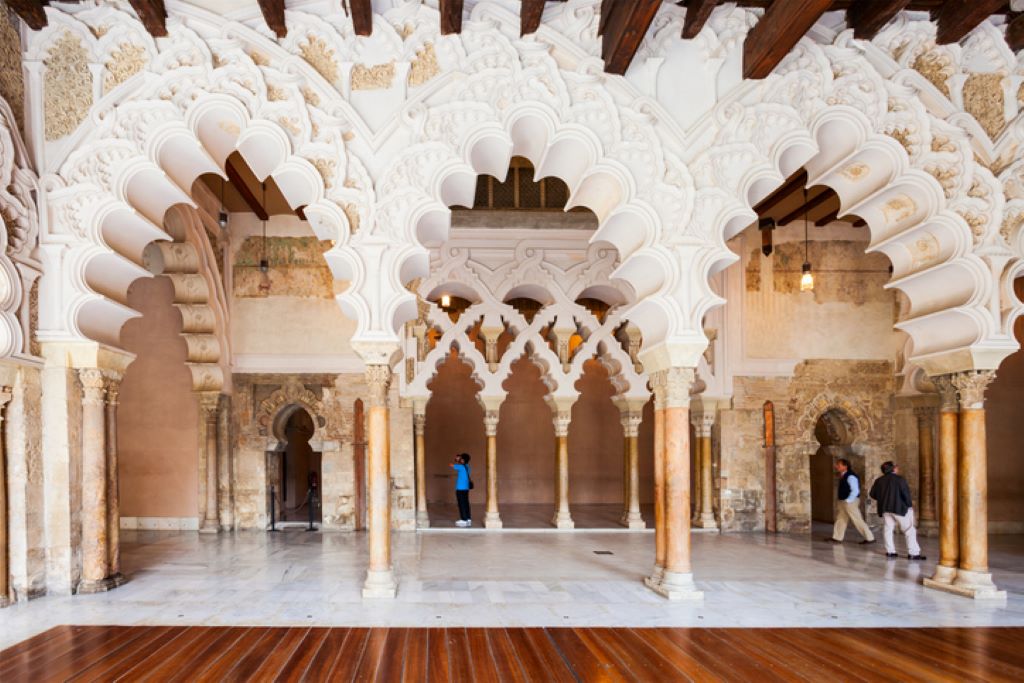
Islamic arches of the Northern Portico at the Aljafería Palace in Zaragoza. / ISTOCK
Al-Andalus was the name given to the territories of the Iberian Peninsula under Muslim rule during the Middle Ages. Its history spans nearly eight centuries, from 711 to 1492, although its borders changed considerably over time.
There is no doubt that Andalousie is the Spanish region where Al-Andalus shone most brightly and reached some of its greatest heights. This happened in cities such as Cordoue, Séville et Grenade. Córdoba was the capital of the Umayyad Emirate and later the Caliphate of Córdoba; Seville was the capital of a powerful taifa kingdom and later the main center of Almohad power in Al-Andalus; and Granada became the capital of the Nasrid Kingdom, the last Muslim kingdom in the Iberian Peninsula, whose territory extended far beyond the boundaries of today’s city and province of Granada. In fact, it also encompassed present-day Málaga, Almería and parts of Jaén and Cádiz.
Andalusia is also the Spanish region where Islamic rule survived the longest. It began in 711, when Tariq ibn Ziyad crossed into the Iberian Peninsula through Gibraltar, and ended in 1492, when Granada fell to the Catholic Monarchs, Isabella of Castile and Ferdinand of Aragon, bringing the Nasrid Kingdom of Granada to an end. That is almost eight centuries.
However, the boundaries of Al-Andalus extended much further. At its greatest extent, it covered more than two-thirds of the Iberian Peninsula. From north to south and east to west, territories in present-day Aragon, Catalonia, the Valencian Community, Castile and León, Castile-La Mancha, Madrid and Extremadura were part of Al-Andalus at different times. So were the Balearic Islands, including Mallorca and Ibiza.
Many of these territories were under Muslim rule at some point between the eighth and thirteenth centuries, and some even enjoyed periods of great prosperity as independent kingdoms known as taifas, including powerful ones such as Saragosse (Saraqusta) and Valence (Balansiya).
Under Muslim rule, existing cities such as Córdoba, Seville, Zaragoza and Valencia were revitalized, with some reaching unprecedented heights. Other settlements, such as Palma and Lleida, were reshaped or refounded, while new towns and cities were established, including Madrid, Murcia, Albacete, Almería and Badajoz, as well as smaller towns such as Calatayud and Vélez-Málaga, among many others.
Today, the legacy of Al-Andalus remains alive in many of these territories. It is not simply a memory: it is part of their landscapes and their identity. You’ll love discovering them.
Al-Andalus is much more than history and monuments
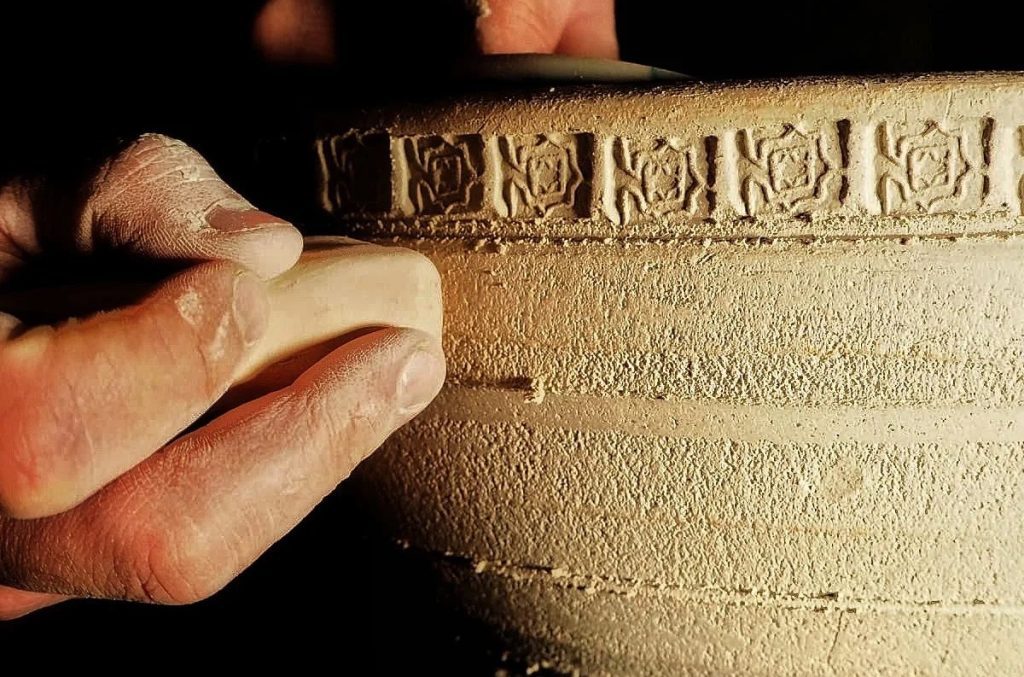
Ceramics are among the traditional crafts inherited from Al-Andalus. This piece is by Saedile. / SAEDILE CERAMICS
Of course, visiting breathtaking monuments that represent some of the greatest achievements of Islamic art, such as the Grande Mosquée de Cordoue ou le Alhambra in Granada, is essential to understanding the cultural greatness, wealth and power of Al-Andalus.
And there are many more, scattered throughout the territories we have just mentioned. Impressive palaces such as the Aljafería in Zaragoza; imposing alcázars and alcazabas, such as those in Seville, Almería or Badajoz; city walls such as those in Huesca, already on the way to the Pyrenees or France; or ancient mosques such as Bab al-Mardum in Toledo.
Al-Andalus also survives in the layout of many cities, in courtyards and gardens, such as those found throughout Andalusia or Mallorca, and in agricultural landscapes such as the extensive rice fields and orange groves of Valencia, or the terraced hillsides of the Axarquía region in Málaga and the area around Ágreda, in northwestern Soria (Castile and León).
But there are many other ways in which the legacy of Al-Andalus remains alive and can still be enjoyed. Gastronomy is undoubtedly one of the most delicious.
Many traditional Spanish desserts and sweets made with almonds and honey, or flour and spices, have roots in this culinary heritage: turrón, pestiños, alfajores… Dishes that combine sweet and savory flavors, such as eggplant with honey, or lamb and poultry stews with prunes, and dishes featuring ingredients introduced or popularized in the Iberian Peninsula during the Islamic period, such as eggplants and artichokes.
Olive oil, one of the defining ingredients of Spanish cuisine, also has a place in this story. Its production and culinary use long predate Al-Andalus, but Andalusi agriculture and food traditions contributed to the rich culinary heritage associated with olive oil in Spain today.
And not only in gastronomy: in traditional music, festivals, crafts… The legacy of Al-Andalus is still very much present in Spain.
How can Muslim travelers discover and experience Al-Andalus?
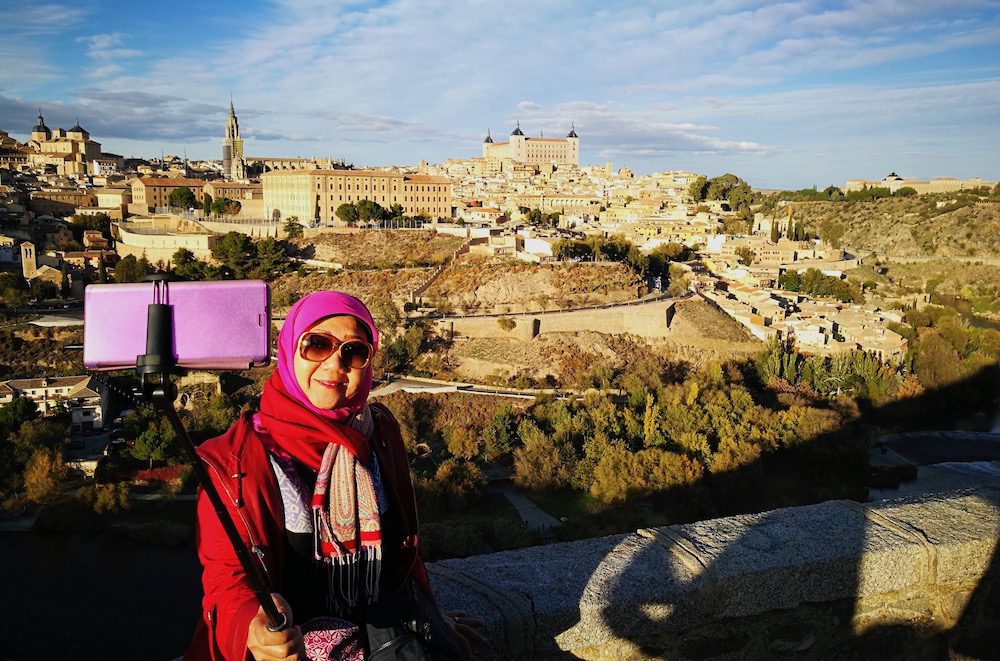
A Muslim tourist takes a selfie with Toledo, one of Spain’s most important centers of Andalusi heritage, in the background. / LET’S GO HALAL
Read, gather reliable information, and plan your trip carefully and well in advance to make the most of it. Our article on how to plan a hassle-free halal trip to Spain can be a good starting point.
Much will depend on how many days you have available, whether this is your first trip to Spain, or whether you think you may have the opportunity to visit the country several times and explore different regions.
If this is your first visit and you have limited time, for example seven days or even fewer, an itinerary including Seville, Córdoba and Granada is a must. But consider whether you could also include other jewels of Al-Andalus, such as Toledo (just 70 kilometers from Madrid) or Ronda (in the province of Málaga, roughly halfway between Granada and Seville).
You can even find traces of Al-Andalus in cities where you might never have imagined them. Madrid, for example. As we mentioned earlier, Madrid is the only Western capital founded during the Islamic period, and there are tours and walking routes that will allow you to discover the traces of Islamic Madrid.
Traces of Al-Andalus even in Barcelona
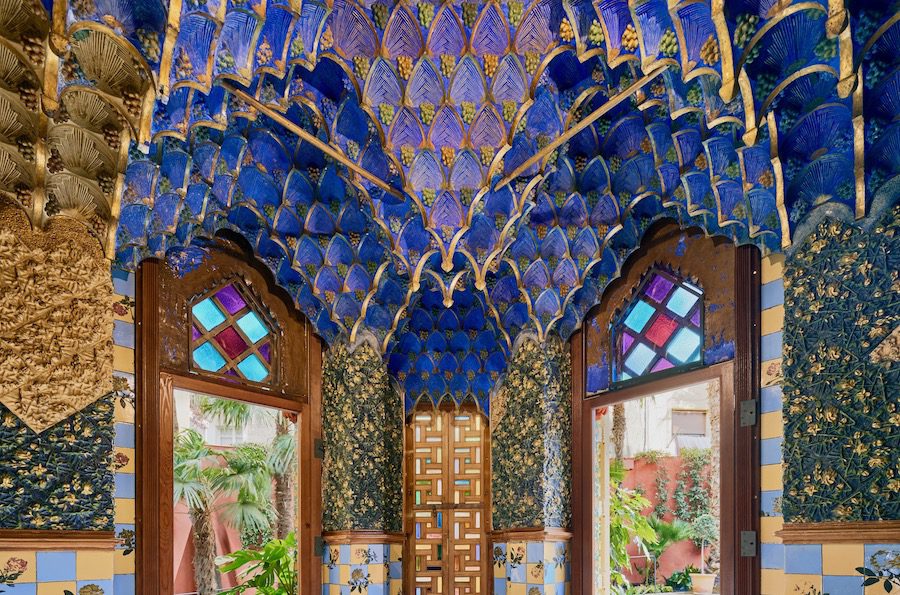
Islamic-inspired ceiling in the Smoking Room of Antoni Gaudí’s Casa Vicens in Barcelona. / CASA VICENS
Even in Barcelone, a city that was part of Al-Andalus for just over 80 years, between 718 and 801, when it was known by the Arabic name Barshilūna or Barshaluna, the influence of Islamic art can still be found, although in a rather different way. No visible architectural remains from that period have survived, but many centuries later, in the 19th century, Neo-Mudéjar architecture brought Islamic-inspired architectural elements back into fashion, with Barcelona’s Arc de Triomf among its most striking examples. You may also be surprised to discover this influence in the work of the great architect Antoni Gaudí.
One of Gaudí’s most distinctive techniques is trencadís, a type of mosaic made from broken ceramic pieces. Although it has several artistic precedents, its rich decorative effects can evoke the colorful ceramic traditions of Islamic architecture, including those found in the Alhambra. Parc Güell offers some of the finest examples of this technique.
Another fascinating example is Casa Vicens, Gaudí’s first major house in Barcelona, built in the 1880s. Its Orientalist design incorporates elements associated with Islamic and Neo-Mudéjar architecture. You can see this particularly clearly in the ceiling of the so-called Smoking Room, with its striking muqarnas-inspired plaster forms resembling palm leaves and clusters of dates. But this is just one of several Islamic-inspired elements found throughout the house.
Having more days available, or visiting Spain on several occasions, will allow you to explore other places with a fascinating Islamic heritage, less well known than that of Andalusia or the traces hidden in major cities such as Madrid and Barcelona.
You may be surprised, for example, by the rich Andalusi heritage of Aragon, a large region in northeastern Spain, located between Castile and Catalonia and bordering the Pyrenees to the north. Here, in addition to Zaragoza’s magnificent Aljafería Palace, one of the oldest surviving palaces of Andalusi origin and now home to the regional parliament, you will find charming towns such as Daroca, Albarracín, Alquézar and Calatayud, whose histories are deeply connected to the Islamic period. Some of them are now considered among the most beautiful towns in Spain.
Aragon is also home to an extraordinary legacy of Mudéjar art, a remarkable continuation and reinterpretation of Islamic artistic traditions in architecture developed under Christian rule. Its distinctive architecture reflects the interaction of different cultural traditions, and several outstanding examples have been inscribed on the UNESCO World Heritage List under the designation “Mudéjar Architecture of Aragon”.
You will also be surprised by the numerous fortresses and walled towns throughout the Valencian Community, or in Castilian provinces such as Soria, where the beautiful town of Medinaceli was once the capital of an important frontier district of Al-Andalus and a place closely associated with the powerful military leader Al-Mansur.
Whenever possible, we recommend choosing Muslim guides or specialists in the heritage of Al-Andalus to explore this immense legacy in greater depth. They can offer perspectives and knowledge that other types of guides may not always provide. Among our guided tours, you will find several visits led by expert Muslim guides.
If you don’t have enough time to organize everything yourself, or if planning your trip feels overwhelming, you can choose from our multi-day tours, several of which focus primarily on the heritage of Al-Andalus. Or you can ask us to design a tailor-made trip for you, exploring less-traveled routes and destinations.
The memory of Al-Andalus is still alive and waiting for you in Spain, to a much greater extent than you might imagine. Don’t miss it!
Explorez une région riche en patrimoine islamique, en nature époustouflante et en expériences familiales uniques. Un joyau caché pour les voyageurs musulmans.