Any time is a good time to visit Spain. All you need is the desire to travel, a bit of research on the expected weather conditions, hotel occupancy rates, and the number of visitors in the cities. Spain will meet—and even exceed—your expectations, welcoming you with open arms.
Choosing the ideal time for your trip largely depends on your personal circumstances and preferences. Are you flexible with your vacation schedule? Do you seek the most favorable and budget-friendly period, or is cost not a major factor? Do you love the energy of bustling streets, or do you prefer a quieter time of year? Would you like to debut your winter wardrobe, experience a bit of chill, or even enjoy the snow? Or are you more inclined to avoid cold temperatures and rain, dreaming instead of long, sun-drenched walks? Are you planning an urban getaway, a cultural tour to discover the impressive Islamic heritage of Al-Andalus, or is your main goal to relax by the sea? Answering these questions will help you decide which dates suit your travel plans best.
Keep in mind that Spain is a very diverse country, where temperatures, weather conditions, and landscapes vary greatly from north to south, as well as between coastal and inland areas. Here are some tips to help you choose the ideal time for your visit based on your unique needs.
Spring: ideal for cultural tours
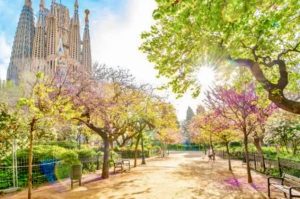
From March 21 to June 21, many consider spring to be one of Spain’s most beautiful and desirable seasons—and, consequently, one of the busiest. Along with autumn, spring is the favorite season for cultural and urban tourism. Mild temperatures, bright sunlight, and clear blue skies invite you to explore the streets and visit the countless landmarks Spain has to offer.
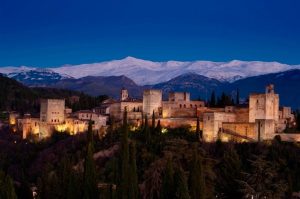
However, the success of the delightful spring season comes with a drawback: higher hotel prices—the highest of the year—and sold-out monument tickets. It’s essential to plan by purchasing your entry tickets onlineseveral weeks in advance for monuments such as La Alhambra (Granada), Park Güell, or the Sagrada Família in Barcelona, and a few days in advance for the Great Mosque of Córdoba, the Royal Alcazar of Seville, or the Royal Palace of Madrid. Even if tickets are available on the day of your visit, be prepared for long lines at the ticket counters. Destinations such as Madrid, the inland cities of Andalusia (Córdoba, Seville, and Granada), and Barcelona are the most popular during this season.
Summer: enjoying the sea
Summer begins on June 21 and ends on September 23. In both Spain and Europe, July and August are prime vacation months, but high temperatures can be a key factor in choosing your destination. Across the country—especially in inland cities—temperatures can easily exceed 35ºC. That’s why most tourists, including many Spaniards, opt for coastal destinations during the summer months. Resorts in Andalusia (especially the Costa del Sol), the Levante region (Valencia, Alicante, etc.), the entire Catalan coast, the Balearic Islands, and even northern Spain (with significantly milder temperatures) are brimming with visitors.
Of course, if you love water activities, summer is undoubtedly your season. However, a major drawback is that in seaside destinations, accommodation prices—and even services like private transportation or car rentals—tend to skyrocket. Conversely, in inland cities (such as Madrid, Córdoba, Seville, or Granada), prices drop considerably; in fact, July and August can be among the cheapest months in these cities. Although temperatures can be high, the longer daylight hours and the vibrant nightlife create a unique atmosphere. By September, temperatures begin to ease, and inland destinations again see a surge in visitors.
Autumn: mild temperatures and golden colors
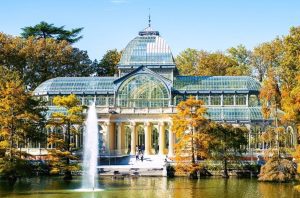
Autumn spans from the end of September to the end of November. The mild weather makes it an attractive time for urban getaways and cultural tours. September remains an ideal month to travel while avoiding the peak crowds, and along with October in inland cities, it is considered part of the high tourist season. In November, temperatures begin to drop significantly as winter approaches, yet they mostly remain moderate. Nature offers a stunning display of ochre and reddish hues as leaves carpet the ground—a wonderful backdrop for those planning cultural tours or urban escapes on a budget.
Winter: the spectacle of snow and Illuminated cities
Winter is the coldest season, but compared to other parts of Europe, the temperatures in Spain—especially along the Mediterranean and in Andalusia—are much milder during December, January, and February. Temperatures rarely drop below 6ºC, and on sunny days they can even reach 16ºC. With the right clothing, enjoying the outdoors is never an issue. Although winter is considered low season for tourism (except during specific dates like the Christmas celebrations from December 24 to January 6), it offers significant advantages: breathtaking deep blue skies, snow-covered landscapes in the mountains near cities like Granada, Madrid, or Barcelona, and even a pleasant coastal experience along the Mediterranean. Astronomically, winter runs from December 21 to March 20.
Festivals with maximum occupancy
We’ve outlined the tourist seasons in Spain based on weather and climate, but it’s also important to note that Spain is a festive country with celebrations year-round that attract thousands of domestic and international tourists—transforming the look and pace of its cities completely. These spectacular festivals are worth experiencing; some have even been declared UNESCO World Heritage events. However, unless your goal is to experience one of these festivities, we advise you to avoid them, as it will be difficult to explore the city as planned. High occupancy in accommodations means higher prices, and if you don’t book well in advance, finding lodging can be challenging.
Here are some key festivals to keep in mind:
– Valencia’s Fallas: Every year, between March 15 and 19, Valencia is transformed by the Fallas celebrations—a festival that combines tradition, satire, and art with fire and gunpowder as its main ingredients. UNESCO declared Fallas an Intangible Heritage of Humanity in 2016.
– Semana Santa (Holy Week): This Christian religious festival has movable dates, usually celebrated at the end of March or sometimes in April. While it takes place throughout Spain, it is particularly spectacular in Andalusian cities. Numerous processions fill the streets with depictions of the Passion and death of Jesus and his mother Mary, turning the celebration into a true street spectacle and one of the main vacation periods for Spaniards.
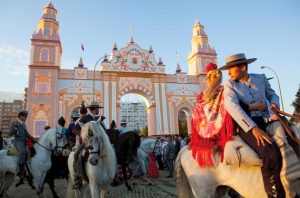
– Seville’s Feria de Abril: One of the most international and popular festivals in Seville, it began in 1847 as a livestock fair but evolved into a celebration lasting at least one week (or even spanning two weekends), with participation from locals and many visitors alike. Think traditional Andalusian costumes, horses and horse-drawn carriages, popular dances—and massive crowds. (Note: the festival sometimes shifts to May.)
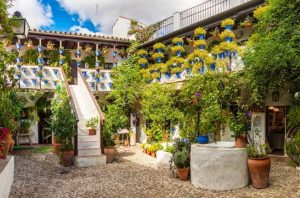
– Córdoba’s Patios Festival: Declared an Intangible Cultural Heritage in 2010, during the first two weeks of May, locals open the patios of their homes to reveal a stunning display of flowers. It’s an amazing floral spectacle.
Other dates and events to Consider
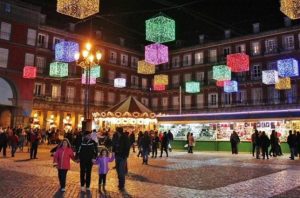
– The December ‘Puente’ (long holiday weekend). Spaniards love taking short vacations throughout the year by combining closely spaced holidays with weekends, known as “puentes” (bridges). One of the most significant is the bridge between December 6 and 8 and the following weekend. During this time, cities light up with Christmas decorations, and skiers kick off the snow season—making it a fantastic time for a mini winter vacation that is in high demand.
– FITUR, International Tourism Fair (Madrid): The world’s second-largest tourism fair attracts around 250,000 visitors and more than 150,000 industry professionals. It is held annually during the third week of January.
– MWC Barcelona (Mobile World Congress): Taking place in the last week of February or the first week of March, this event attracts over 100,000 visitors.
And what about Ramadan?
Experiencing Ramadan in Spain is quite different from doing so in a predominantly Muslim country, but the growing Muslim community here celebrates it wholeheartedly. In the major tourist cities, an increasing number of halal restaurants offer special Iftar menus. You’ll also find mosques conveniently located in city centers or nearby. Visit our website to discover them.
This comprehensive guide should help you choose the best time to plan your halal travel experience in Spain. Whether you’re drawn by cultural tours, seaside relaxation, or festive celebrations, Spain has something to offer every Muslim traveler year-round.