Top attractions Address: Cerro Calderico, 45700 Consuegra, Toledo
Where: Some of the most iconic and best preserved windmills are located in the province of Toledo. Just over 60 kilometers —about 40 minutes by car— separate Toledo city from Consuegra, one of the towns in the province, home of the most famous mills. To get there, follow southeast the CM-42 regional road. But these mills are not the only ones in Toledo. There are also mills in Ciudad Real, another province of La Mancha bordering Toledo.
Opening hours: The interior of Bolero Mill can be visited from Monday to Sunday, from 09:00 to 19:00.
Points of interest: Consuegra's mills
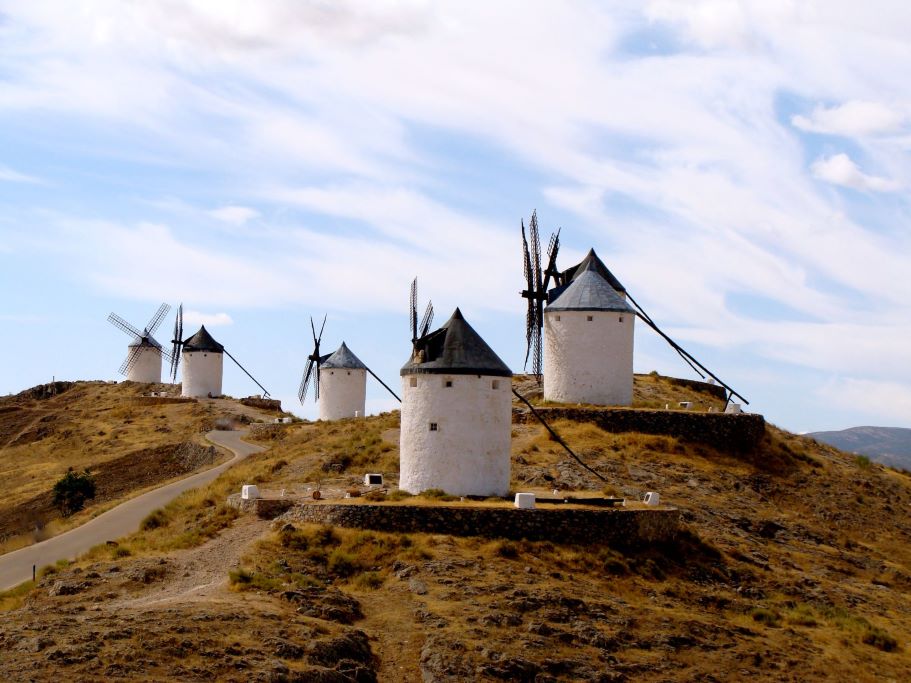
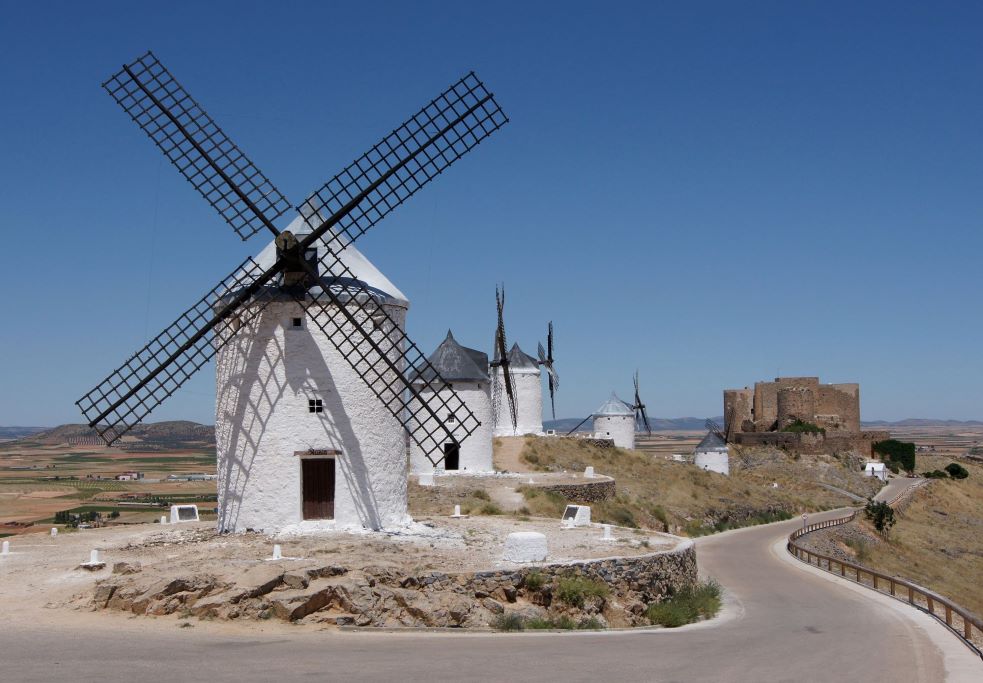
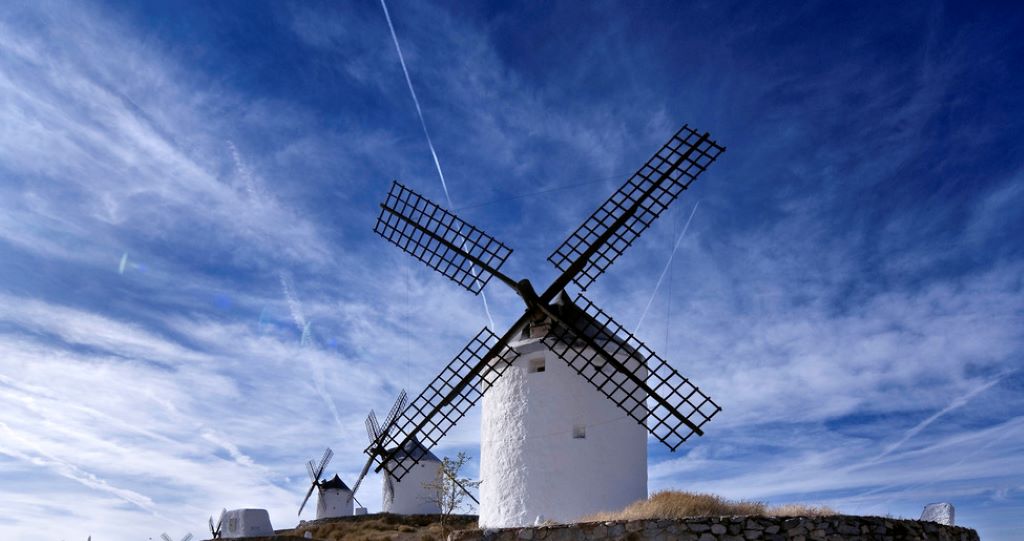
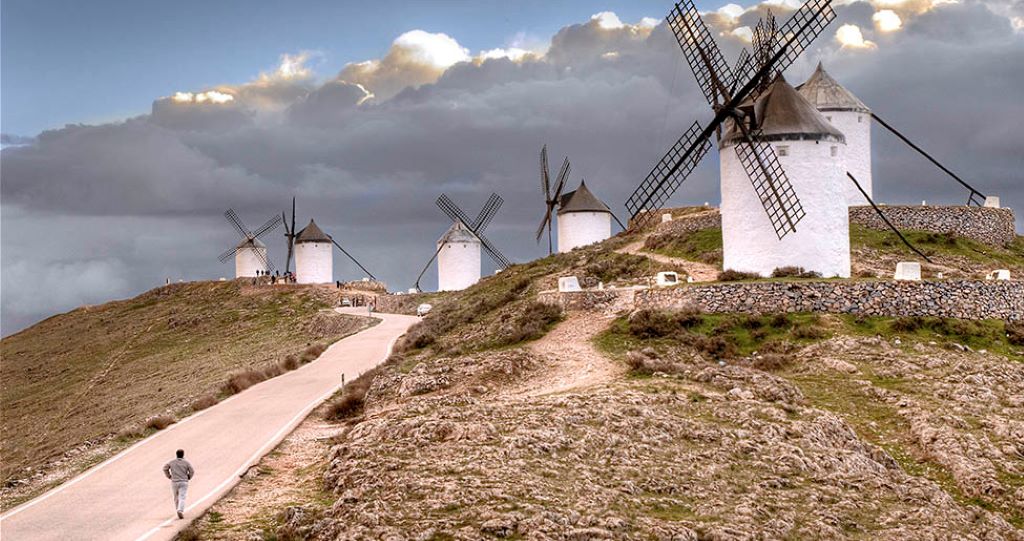
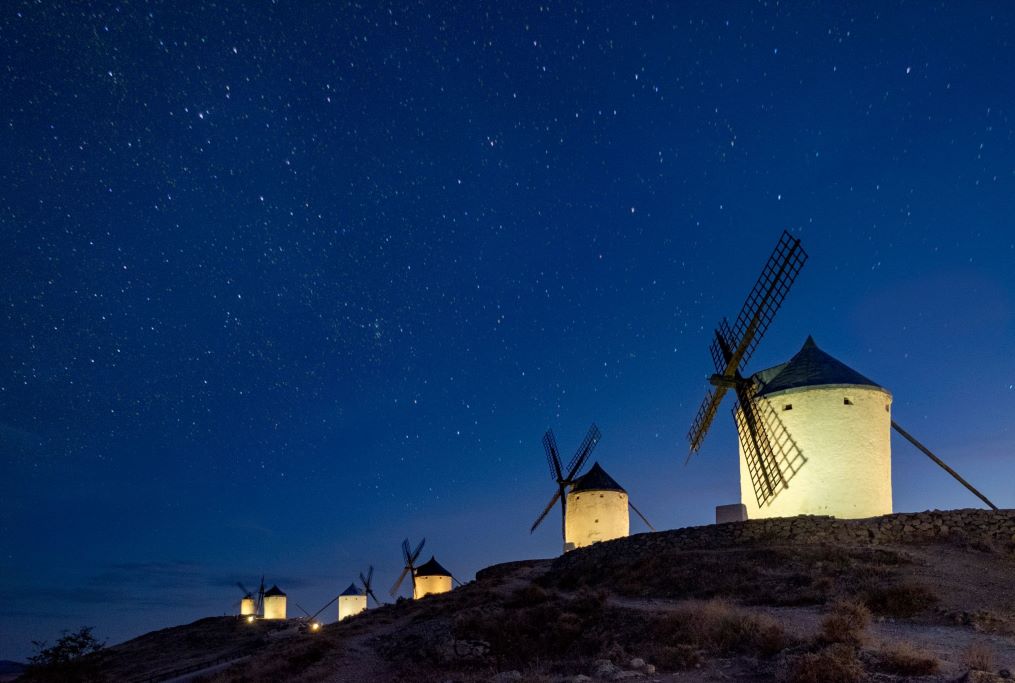
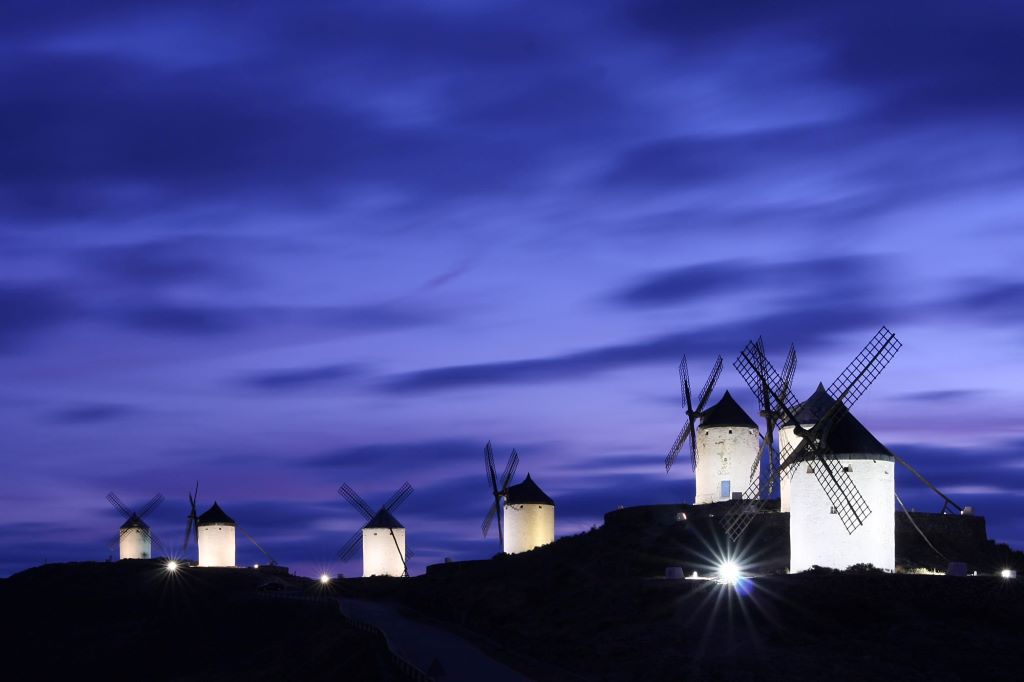
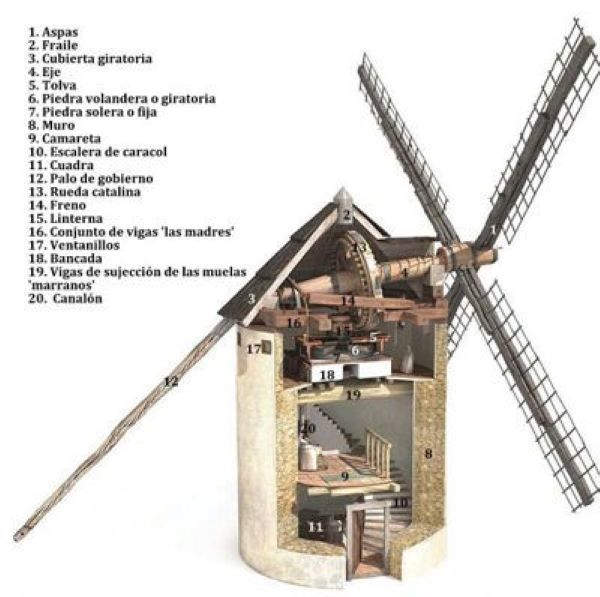
Aligned on the hill Calderico you will find twelve windmills and a medieval castle that offer one of the most picturesque and famous images of Castilla-La Mancha. All of them have been restored last century, although the oldest one dates back to the 16th century. Some retain the complete machinery, such as the so-called Sancho, Rucio, Espartero and Bolero. In the latter is also the tourist office.
The castle that accompanies the mills was originally an Islamic watchtower from the Caliphate period, later (12th century) transformed into a castle of the Military Order of Jerusalem.
The interior of Bolero Mill can be visited from Monday to Sunday, from 09:00 to 19:00. Price: € 2.
Other locations: Windmills are found in many other places in La Mancha. In addition to Consuegra, in the following villages are some of the best preserved: Tembleque, El Romeral, Herencia, Alcázar de San Juan, Campo de Criptana and Mota del Cuervo.
The origins of windmills
The construction of these mills was due to a great drought that hit the interior of the Iberian Peninsula in the 16th century, which led to changing the use of water force by wind.
Some scholars point out the origin of windmills in Greek culture, which already used wheels driven by the force of the wind, although there is no record of its use in milling. There is also the theory of its origin of Muslim invention, brought to Europe in the Middle Ages, reaching the southern half of the peninsula and giving rise to the Mediterranean windmill. But there is still a third theory, which indicates that they were invented in Western Europe in the 12th century; combining the technology of the Arab mill, with a horizontal axis, with the Vitrubium wheel (already used in Roman times).